
Cover Crops for Gardeners
You may have heard of cover crops as a common organic and regenerative agriculture practice. What is cover cropping, and can home and community gardeners incorporate it into their gardening season?
What’s the deal with cover crops?
In annual vegetable production, the plants take up nutrients from the soil as they grow and produce the vegetables you enjoy. Season after season, nutrients like nitrogen are absorbed by the plant and removed when you harvest and pull the plant at the end of the season. Unless we intervene, the soil will have less and less nutrients available, leading to stunted growth, unhealthy plants, and smaller vegetables.
There are plenty of ways to replenish the nutrients in the soil, like adding compost, composting in place, or rotating crops. Growing cover crops is another method.
Cover crops are plants grown not for harvest, but with the intention of building healthy soil. They do this in a variety of ways - first and foremost, by adding organic matter to the soil, similar to the process of adding compost or composting in place. In this case, the entire plant is recycled back into the soil. Some cover crops are even nitrogen fixers, meaning they actively add nitrogen to the soil as they grow. Others help break up compact soil.
Bonus! Many cover crops help suppress weed growth and attract pollinators.
Cover crops have a lot of benefits. However, cover cropping in a farm setting looks a lot different than it would in small setting like a garden plot or backyard garden. It’s important to understand these differences and the potential pitfalls.
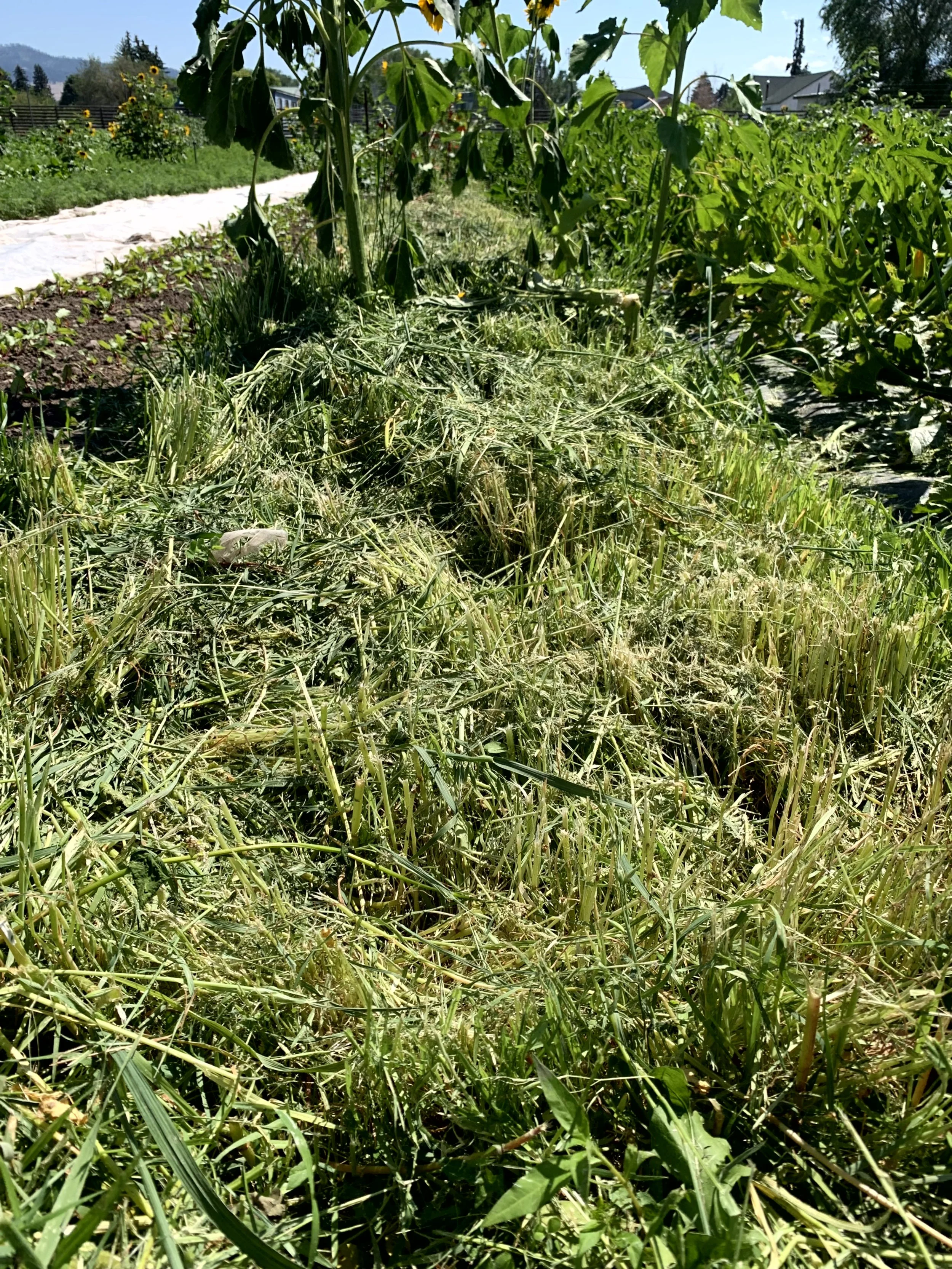
A row of freshly mown back cover crop mix at Orchard Gardens Farm.
How do farmers use cover crops?
On a farm, this might look like leaving a section of field planted with cover crops for several years. This practice has several benefits. First, perennial cover crops like a winter rye are able to grow for several seasons and develop a significant root mass underground that breaks up compaction and will eventually decay and feed the soil. The addition of organic matter plus the absence of “heavy feeder” vegetable plants means that the soil builds back its nutrient bank over these years.
Setting land aside for cover crops for multiple seasons also has the benefit of disrupting the pest cycle. Sometimes it takes years to do this, rather than a single season.
As the farmers are only periodically mowing back the crop before it sets seed, the soil is also left completely untilled and undisturbed. This allows beneficial mycorrhizal fungi to flourish and good soil structure to form.
Some varieties of cover crops, like clovers or peas, are nitrogen-fixing, which means they add nitrogen back into the soil as they grow.
Often, farmers use a mix of different cover crops to take advantages of the different benefits. Fast-growing oats and buckwheat might help shade out weeds early on, then once they’re cut back, the shorter clover has a chance to get ahead.
For all of these reasons, cover cropping is a useful practice for organic growers. If you’re looking to use cover crops in your garden plot, however, things might look a little different.
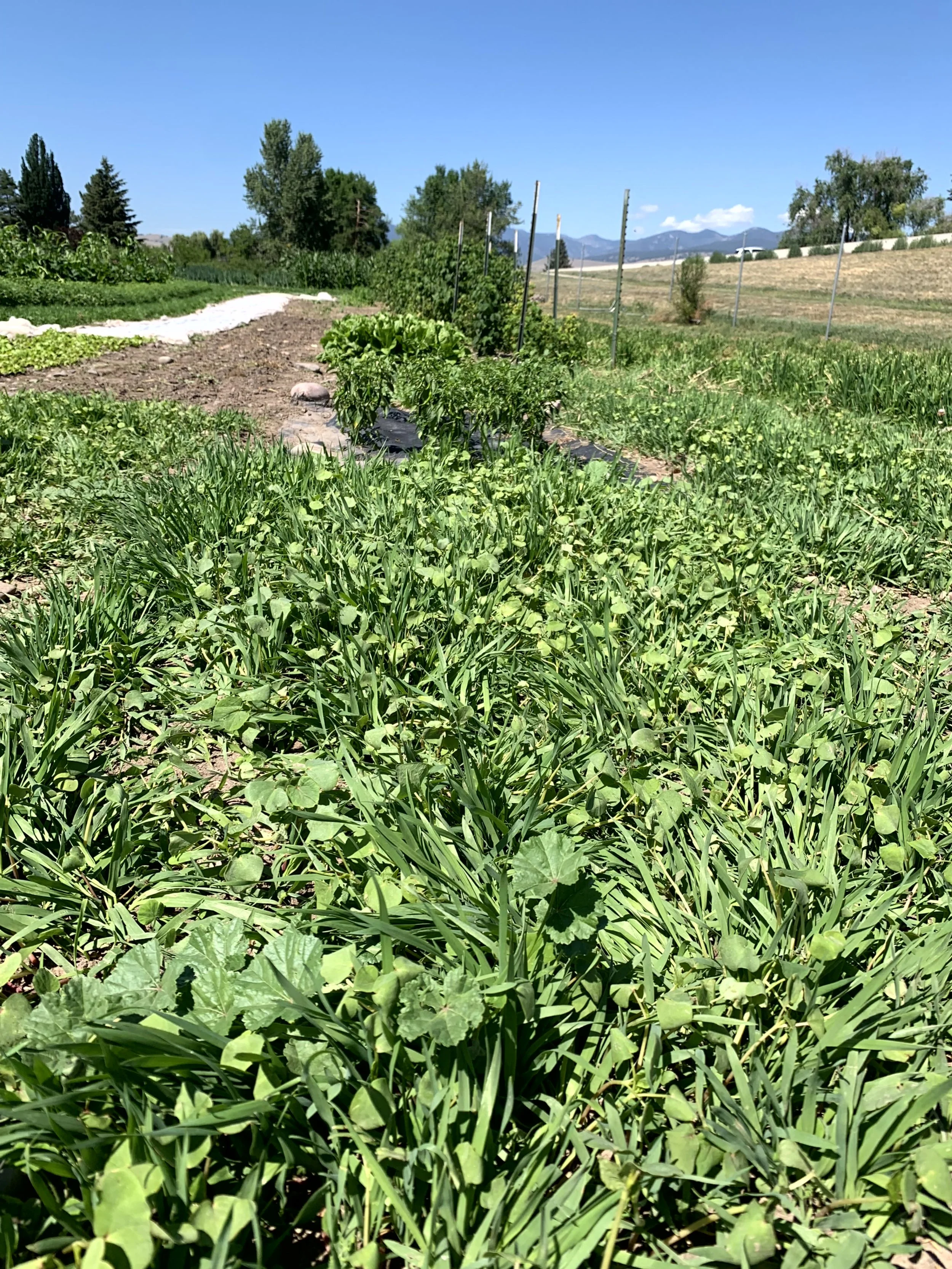
Cover crop mix of oats, buckwheat, and clover sown after a spring crop.
How to use cover crops as a gardener, in a smaller space
In a small space, every inch matters! Setting aside space for cover crops in a garden means that much less space for harvestable crops. In most cases, regularly adding compost, composting in place when possible, and rotating crops should be sufficient to maintain soil health. But for the intrepid and adventurous gardener willing to put in the time to observe and carefully maintain a cover crop, I’m here to share some pitfalls to avoid.
Common pitfalls:
Weeds will still grow in a cover crop, and can actually be more difficult to spot and dig out. Make sure to regularly patrol and remove quackgrass, bindweed, shaggy soldier, thistles, and other weeds that might invade your cover crop. If you’re already struggling with a particularly weedy plot, sowing a cover crop is not your best bet.
Cover crops need to be regularly cut back. This prevents them from setting seeds and spreading among other crops. The residue is left to break down in the soil. This requires you to use a weedwhacker, become vigilant with your shears, or even break out a machete! Be sure to cut several inches above the ground so there is still enough plant left to grow back.
A patch of undisturbed cover crop can be prime pest habitat. Mice, voles, and slugs could all find a home. However, if you’re frequently working in your plot and cutting back the cover crop, this will deter pest presence.
Most gardeners aren’t able to set aside a chunk of their garden in cover crops for several years. While a single season in cover crops can still be beneficial, this eliminates some types of cover crop. For instance, perennial winter rye, which is a farmer favorite because of its dense root growth, will overwinter and come back in the spring and takes a long time to fully decompose.
Good kinds of cover crops for gardeners
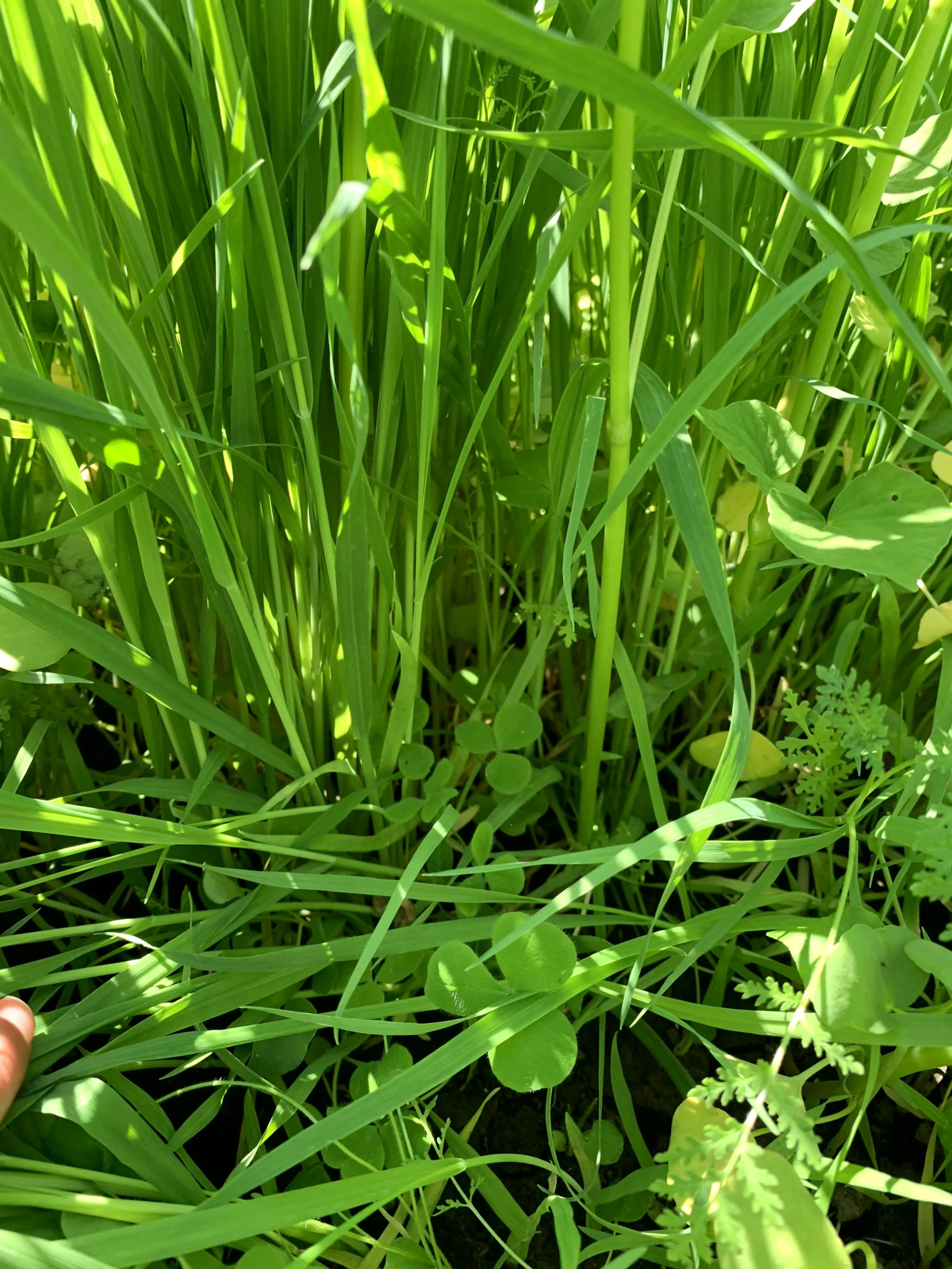
A mix of oats, buckwheat, and clover. The slower growing clover will take off after the first cut of the oats and buckwheat.
The following are cover crops that could work in a community garden or home garden setting. Many of these are available at Mountain West Co-Op. Consider using a mix with some or all these cover crops, since they serve different functions. At Garden City Harvest’s Orchard Gardens farm, the farmers use a mix of approximately 85% oat grass and smaller amounts of buckwheat, clover, and maybe a little phacelia.
Clover - red clover is an annual and Dutch white clover is a perennial; both are nitrogen-fixing plants
Buckwheat - a fast growing annual cover crop that’s easy to cut back and pull out
Oat grass - another fast growing annual
Daikon radish - can be harvested as a crop as well, but these radishes are helpful for breaking up compact soil
Phacelia - pollinator friendly and attractive to other beneficial insects
Gardening in a small space limits what can be done with cover crops while still growing food. What follows are a few ideas for how you could incorporate cover crops into your garden.
Rest a bed for a season or after early spring crops
Set aside one section or bed in your garden for a whole season. Grow a cover crop for the year, then put it back in production the next year. Similar to rotating crops, this can give your soil a break for a year and add some organic matter where previously you were taking it out.
Another option is to do “relay” cover cropping, where you grow an early season spring crop like spinach, salad greens, or radishes, and then plant your cover crop in this area after you’ve finished harvesting. These early season crops tend to be light feeders (they don’t draw a lot of nutrients from the soil), so this method is comparable to resting the soil for a whole season.
Plant a living pathway
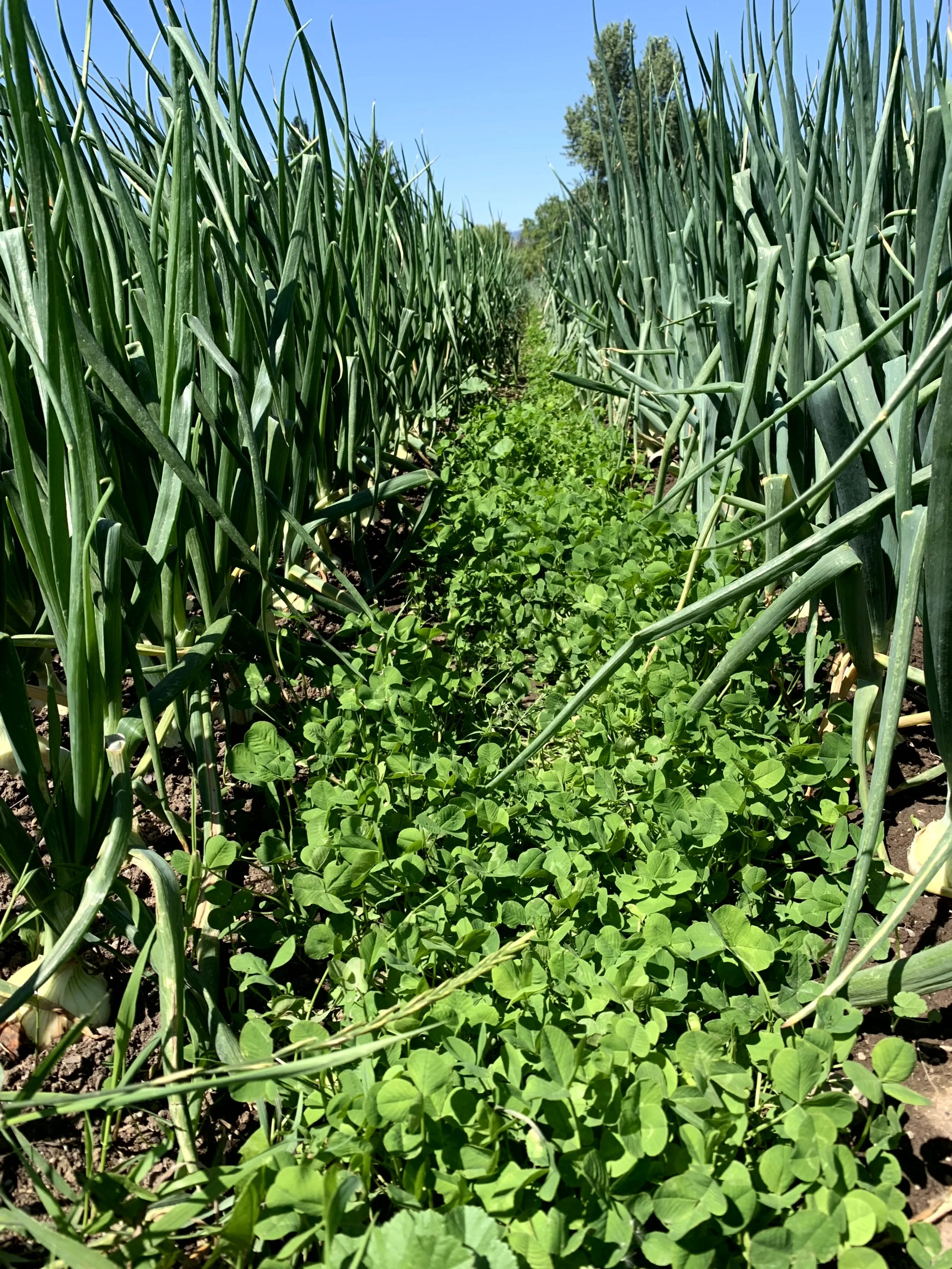
Growing clover in your walkways is another option. It’s nice to kneel on while harvesting or weeding, and if you plan to turn over your whole plot at the end of the year, you get the benefit of the nitrogen fixed by the clover.
You will need to regularly cut back the clover so that it doesn’t go to seed and cover your whole plot, start to compete with your plants, or shelter pests like rodents and slugs.
Beware - while a good clover mat can suppress many weeds, you will still have to get in there and weed, which can be even more difficult than in bare soil!
Perimeters
Bed edges and bed ends can also be planted in cover crops to help with weed suppression. Consider a patch of clover at the end of your bed. At the end of the season, you can dig up the patch and incorporate the whole plant back into your soil, roots and all.
Phacelia is another good option for the ends of beds. Pollinators like bumblebees are very attracted to phacelia, so in addition to shading out weeds and resting the soil, you’re also benefiting your existing crops.
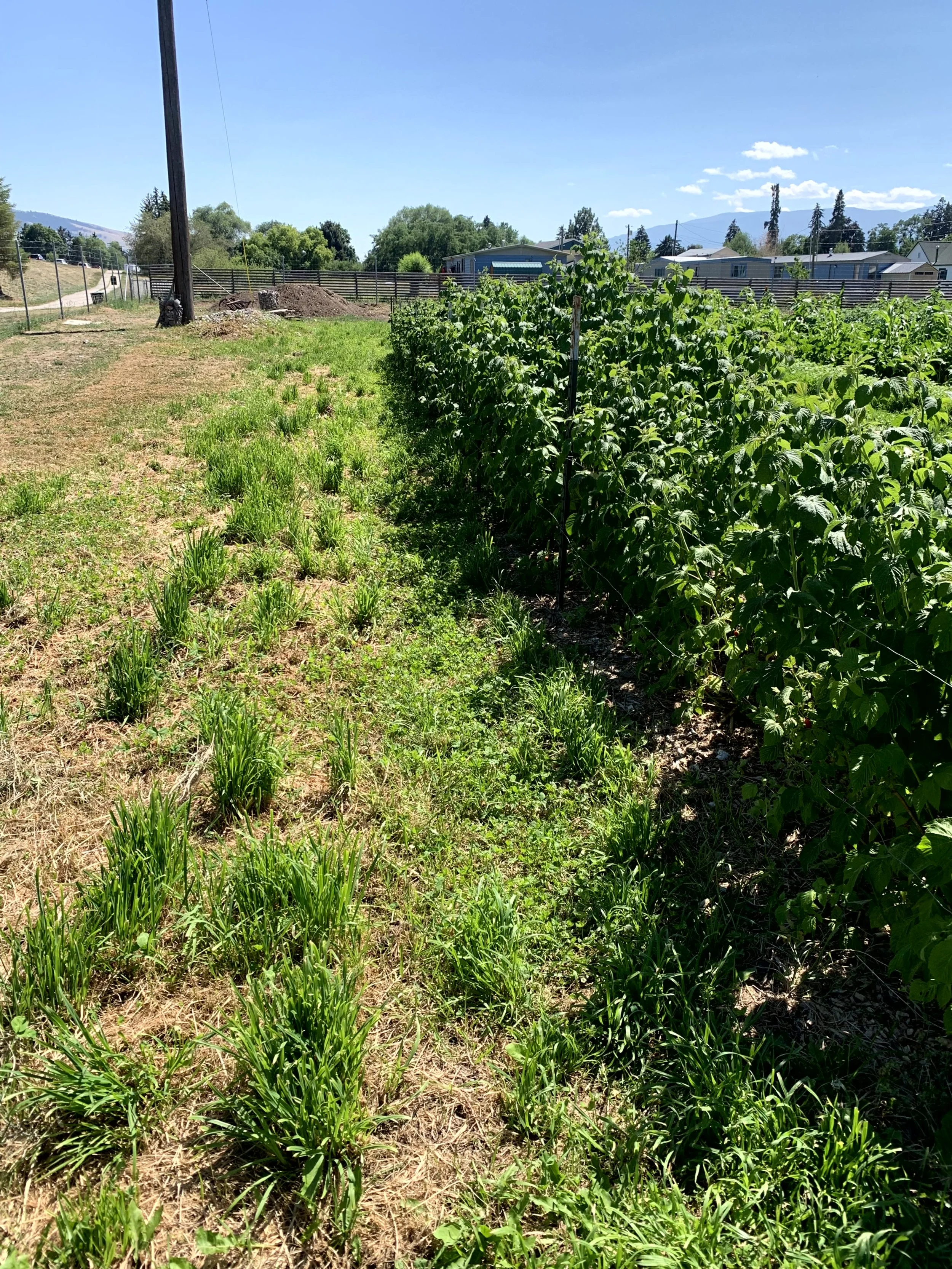
Cover crop grown on the perimeter of a field to create a weed buffer.