
Climate-friendly Actions Gardeners Can Take
When I told my five-year-old that it was Earth Day, he said, “should we give Earth a gift?”
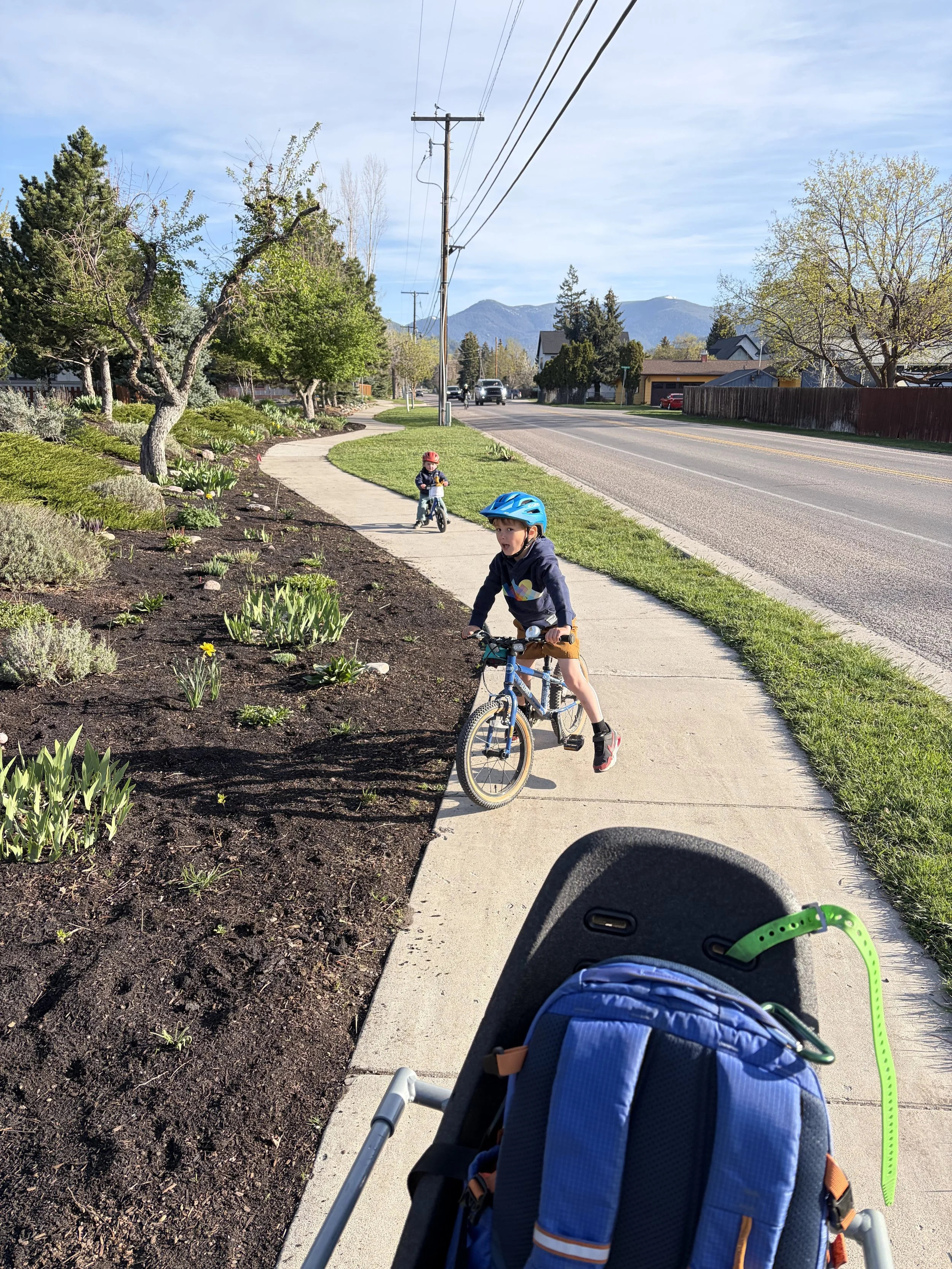
“Sure,” I said. “We can ride our bikes to school today.”
With excitement in his eyes, he said, “okay!”
As I pedaled from preschool drop-off to work, I was thinking about the ways gardeners can give gifts to the Earth. It turns out, there are lots of food-focused climate solutions each of us can participate in every day. Here’s a list of five of the most impactful climate-friendly actions gardeners can take. Try one, or all!
Don’t let any of your produce go to waste. More than ⅓ of all food grown is wasted somewhere between field and plate. On a large scale, it also means we are burning fossil fuels to grow the food, but not fueling our bodies with that food. If you have grown more food than you need, please consider giving extras to your friends, family, neighbors, or the Food Bank. Or, preserve your food for later by freezing, canning, or drying (learn more about preservation, here).
Make sure food scraps and plant matter go to the compost instead of the landfill. When food waste and/or plant matter goes to a landfill it produces methane, a highly potent greenhouse gas. When it goes into a compost system (either backyard or a local collector, like Missoula Compost or Soil Cycle) it generates fewer emissions and creates a nutrient-rich soil amendment that will help your garden thrive next season. Note that some food scraps (e.g. dairy, meat, oil) and weeds (e.g. bindweed) should not go into small backyard or community garden compost systems because, 1) the system does not get hot enough to adequately break down certain things, 2) weeds re-root and weed seeds are dispersed in compost, and 3) pests can be an issue. Learn more about composting in these blog posts.
Only apply necessary amendments, and at the right time. Greenhouse gas emissions are generated in the creation and distribution of fertilizers, and also when we over-apply them. When we apply more amendments than the soil and plants can hold and use, they end up in our waterways, which can harm our beautiful ecosystems. Pay special attention to application amounts and recommended timing, only applying when necessary. This may just save you some money as well.
Plant trees and shrubs. Trees and shrubs help keep carbon in the soil, provide shade that can reduce the need for cooling buildings in the summer, and can also produce delicious food. If you are wanting to try trees in Missoula, you might consider apples, pears, apricots, cherries, or plums. If you are interested in nuts, you might try hazelnuts or chestnuts. If you are looking for shrubs, serviceberry, currant, and elderberry do well in Missoula.
Eat more plant-based protein by growing high protein crops such as beans, peas, and broccoli (yes, surprisingly so!). Ruminant animals (e.g. sheep, cattle, and goats) produce methane, so avoiding, or cutting down on, consuming those animal products will reduce climate change impacts. And, have you ever gathered with friends, young and old, to shell beans? It’s great fun!
While this list is focused on individual action, we are all in this together. Let’s shell beans together, support collective efforts on these topics, and share meals. Historically environmental and climate work has been framed as all about sacrifice - the more we sacrifice, the better. But, sharing food, growing compost, planting trees, spending less money, and trying new foods all sounds pretty fun and generative to me. I think my son would enthusiastically say, “okay!” if I asked him to try anything on the above list (I know he loves shelling beans).
Still eager for more?
If you are asking questions like: what are the impacts of using peat moss mixtures in my garden? What’s the emissions scoop on flying? What’s the deal with electric vehicles? How does solar energy even work? Then check out Project Drawdown — who informed this post, and has a plethora of additional information about climate solutions in lots of different sectors.
Want to plug into this work on a local level? Check out the work of Climate Smart Missoula and Families For a Livable Climate.
And in the meantime, I hope to see you in the garden!