
The Power of the Nudge: What Kids in a Garden Taught Me About Teaching
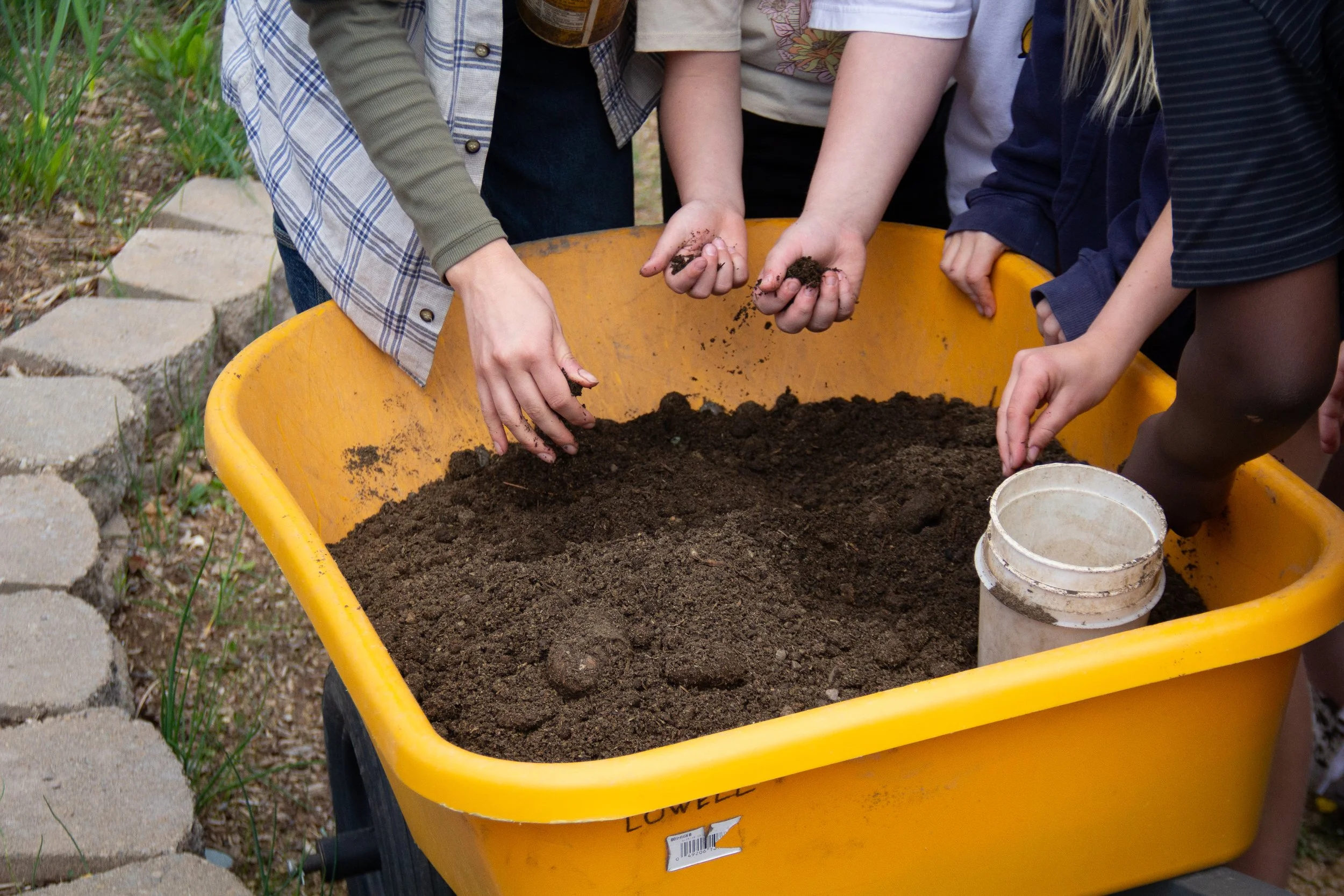
Students sink their hands in the soil to learn about its composition and health. Photo by Gabby Friedlander.
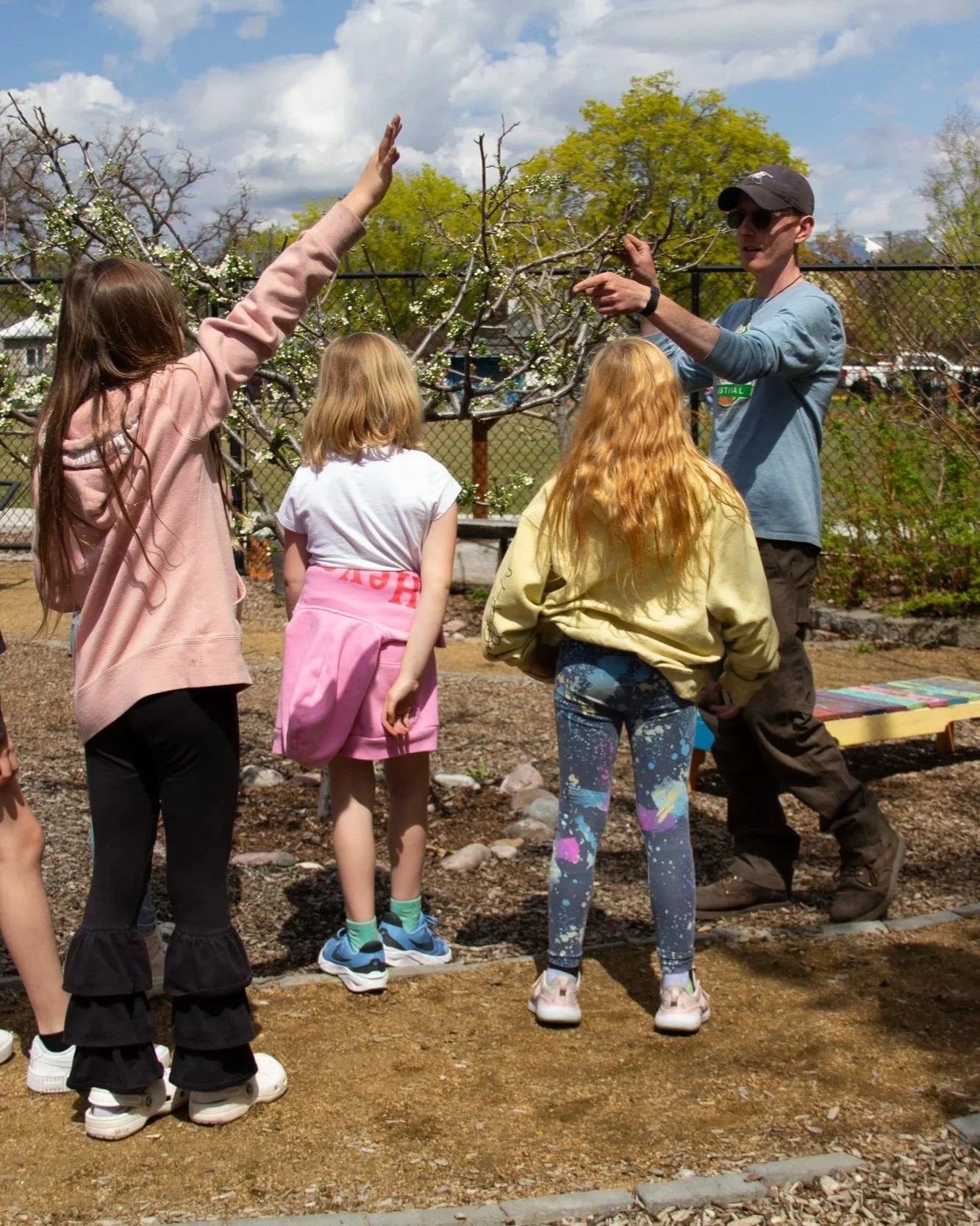
Henry teaching at Lowell’s School Garden. Photo by Gabby Friedlander.
What exactly should we expect from a group of 20 elementary school students when they come into one of our gardens? Is it undivided attention? Is it them sitting silently while they take in every word of wisdom we have for them? I’d welcome such a scenario, but it's seldom the case.
Garden City Harvest maintains and teaches in eight school gardens across Missoula, hosting thousands of students in these spaces each year. These gardens are exciting and mesmerizing places for students accustomed to an indoor classroom. Towering sunflowers and ripe tomatoes, paired with garden tools and gloves, can be more than any attention span can resist. I remember when I was young and on a field trip or at a special presentation, the anticipation and energy around what could possibly be in store for me in this new special place was hard to hide. That energy can turn my classroom into something pretty intimidating to manage.
So this begs the question: as outdoor educators, what exactly is our role when it comes to managing our classrooms? How do we focus this energy? And here we wrestle with the delicate balance of education through freedom. How can we pass on our learning objectives while giving our students what they truly want when outdoors: the freedom to be curious on their own terms.
Our lessons often begin with a quick circle where we lay down the rules to keep everyone happy and safe, and introduce a key concept that we hope our students walk away with. And when I say concept, I'm talking about the bare bones, nuts and bolts of something. Whether that be the anatomy of a plant, or the scientific method, it's best to keep it simple in explanation and lecture, and let them explore and observe it in action.
We often describe these concepts through the lens of "thinking like a farmer," and rely on students’ powers of observation. You'd be surprised how present and content a student is when they are given the freedom to explore and notice on their own, given space to follow their own curiosity. Arriving at a question on your own makes you much more interested in the answer.
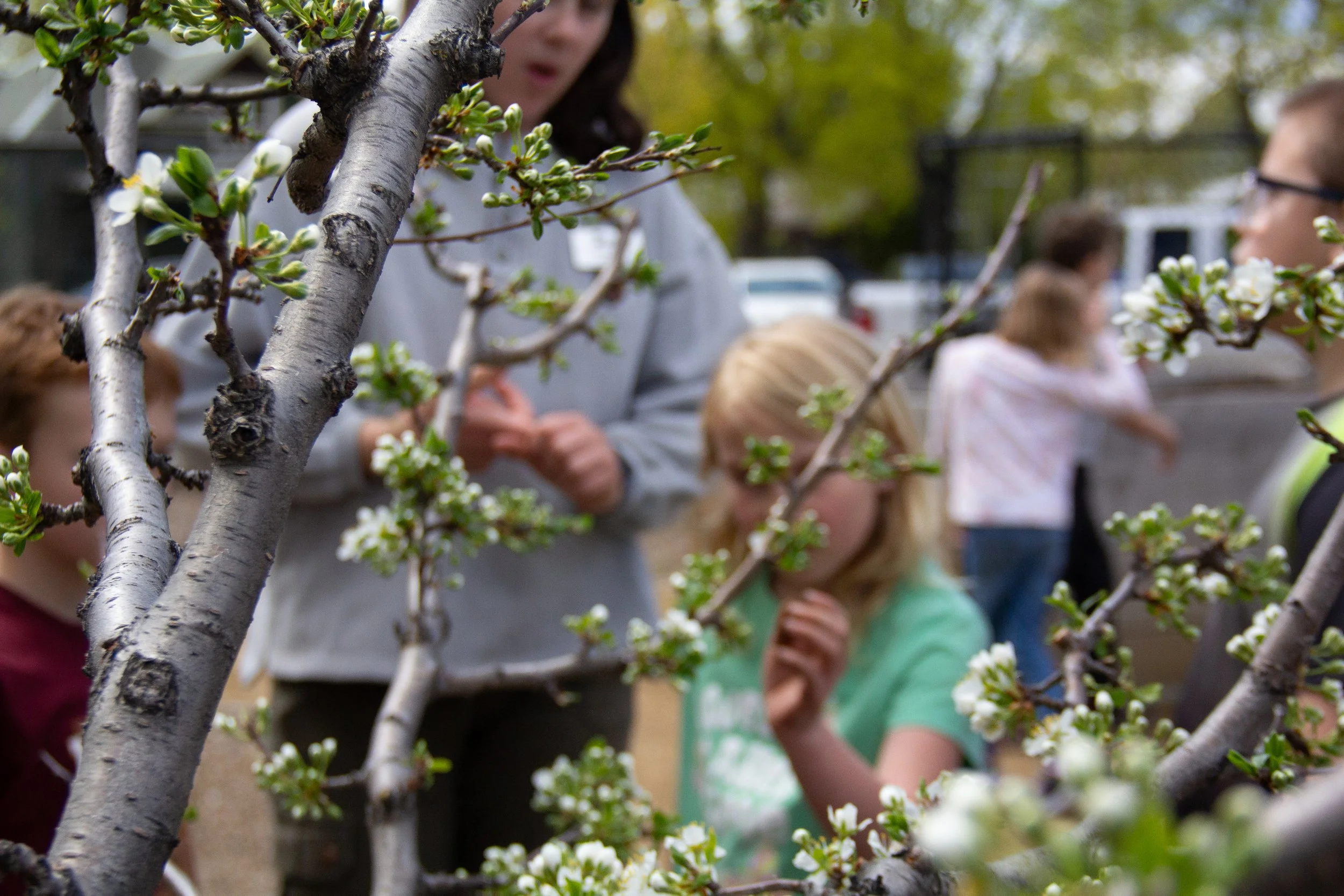
Observation: one of the most powerful teaching tools. Farmer Lyris looks on as a student checks out the buds on a fruit tree. Photo by Gabby Friedlander.
An outdoor classroom has great potential to be a teacher all of its own. A beetle on a flower, a worm darting across the soil surface, or a bird perched on a sunflower all have an important lesson attached to them. They just need to be noticed. So, as educators, it's our role to set the scene where observation can happen, and nudge our students in the direction of curiosity. I think any educator would attest to the power of the nudge. Collect the excitement and energy that comes into your space, and softly guide it. Complete control is an illusion, so it's best to loosen the grip on the steering wheel and be open to detours. These detours are where the ears of your students truly open up, and where you can begin handing them some knowledge that might stick.
Every day and every lesson is a little different in the gardens. You can't win them all. Strange weather, pre-lunch hangry kids, post-lunch sleepy kids, and classes that just don't show up can leave you wondering if you got through to anyone that day. But it's a numbers game, and I can always find at least one victory within any given lesson. So, with a little freedom and a few aptly placed nudges, an outdoor classroom can be a place where curiosity blossoms for students, and kids can discover that "the best teachers are those who show you where to look, but don't tell you what to see."
—a quote often attributed to Alexandra K. Trenfor, though whether she actually exists remains delightfully unclear.
Photo by Gabby Friedlander.