
Gardening in the Age of Climate Change
Missoula's seasons don't look the way they used to. Hundred-mile-an-hour windstorms. Smothering wildfire smoke. Unquenchable heat waves. Late-spring frosts. Freakishly warm winters. For gardeners, always down on our knees tending a small plot of land, the impacts go all the way down to the roots.
I asked community gardeners, some of whom have been growing with Garden City Harvest for over fifteen years, for their experiences on gardening in an age of climate change. They shared what they’ve observed, the challenges they face, how they’ve adapted, and the questions they still have.
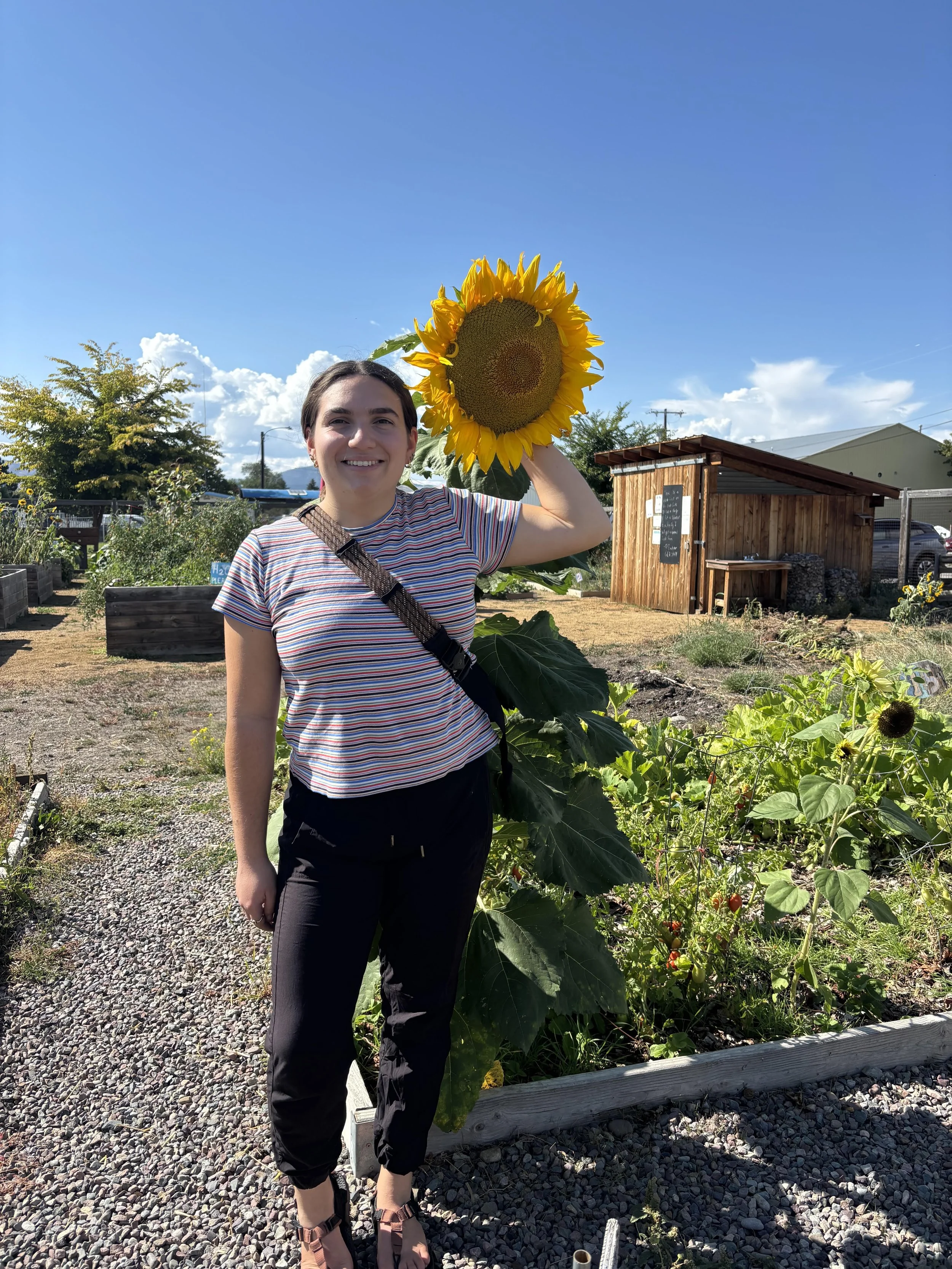
Bitterroot Line gardener Cassidy Leno poses with a sunflower as big as her head in the garden
Winter
Some gardeners are considering climate change before the season even starts, as they plan their plots. Cassidy Leno, who has been gardening at the Bitterroot Line Garden for several years, stressed the importance of growing plants that are hardy to our specific climate. Other gardeners emphasized this concern, and highlighted their use of bolt-tolerant and frost-tolerant varieties to extend the growing season in spite of extreme weather.
Tips and Tricks
Swiss chard and kale can withstand big swings in temperature, and perennials like rhubarb and root veggies such as carrots are also known for their hardiness. Bolt-tolerant varieties like Tyee spinach, Butterhead lettuce, and hardy crops like lacinato and winterbor kale can help extend the life of your plants. Learn more about crop recommendations and timings for Missoula veggie growing here.
Spring
Spring in a post-climate change Montana can sometimes resemble the more extreme seasons, summer and winter. Early warm days might encourage us to start planting sooner, only to be foiled by a late-season frost. Peter Zalewski, a lifelong gardener who grows at Milwaukee Trail, recalled, “a couple years ago, we had fruit blossoms in March followed by a hard frost that killed them off and we didn't get any fruit production that year.” 2026 has also been a rough year for fruit trees, which, like humans, can be fooled by early warm weather and start the season before their typical schedule, just to get frosted out. Late frosts can be hard to predict, even for seasoned growers. Valerie Pateman of Meadow Hill, who’s been gardening for 30 years, reflected, “This year, I had to restart many plants since the weather got suddenly frigid and froze multiple starts.”
Tips and Tricks
Watering soil before a potential frost can help insulate roots, and frost blankets (or even bedsheets) can also provide some buffer. With hot crops, like tomatoes, peppers, and cucumbers, the best way to protect against surprise late colds is to hold off on transplanting starts until the chance of frost is well past. In the past, the last spring frost in Missoula has often fallen in the middle of May. We recommend waiting until the last week of May to put your hot crops in the ground. However, with constantly variable weather, it’s always a good idea to keep a frequent eye on the forecast. Physical barriers like “Walls of Water” plant protectors can also act as mini greenhouses, protecting plants from frost damage. Learn more about how to protect your plants from frost here.
Summer
By midsummer, the worry shifts from late cold snaps to extreme heat and wildfire smoke. This is where I’m writing you from - throughout the summer, the air quality index has landed consistently in the “unhealthy” range, and prolonged time outside hurts the eyes, throat, and lungs. Temperatures hang in the high-nineties, and plants wither without constant attention, which is hard to offer, because, well, going outside hurts. Leslie Anderson, a gardener at ASUM, writes, “I suspect the very hot temps in July caused my berry production (raspberries and strawberries) to grind to a halt despite the presence of many blossoms and unripe berries. I also suspect that smoke has delayed the ripening of my tomatoes.”
Tips and Tricks
When temperatures rise above ninety degrees, tomatoes stop producing the pigments that turn them red, a process called heat-stalling. To save your tomatoes, you can pick them at the stem as soon as they start showing a faint color and bring them inside to ripen on your counter.
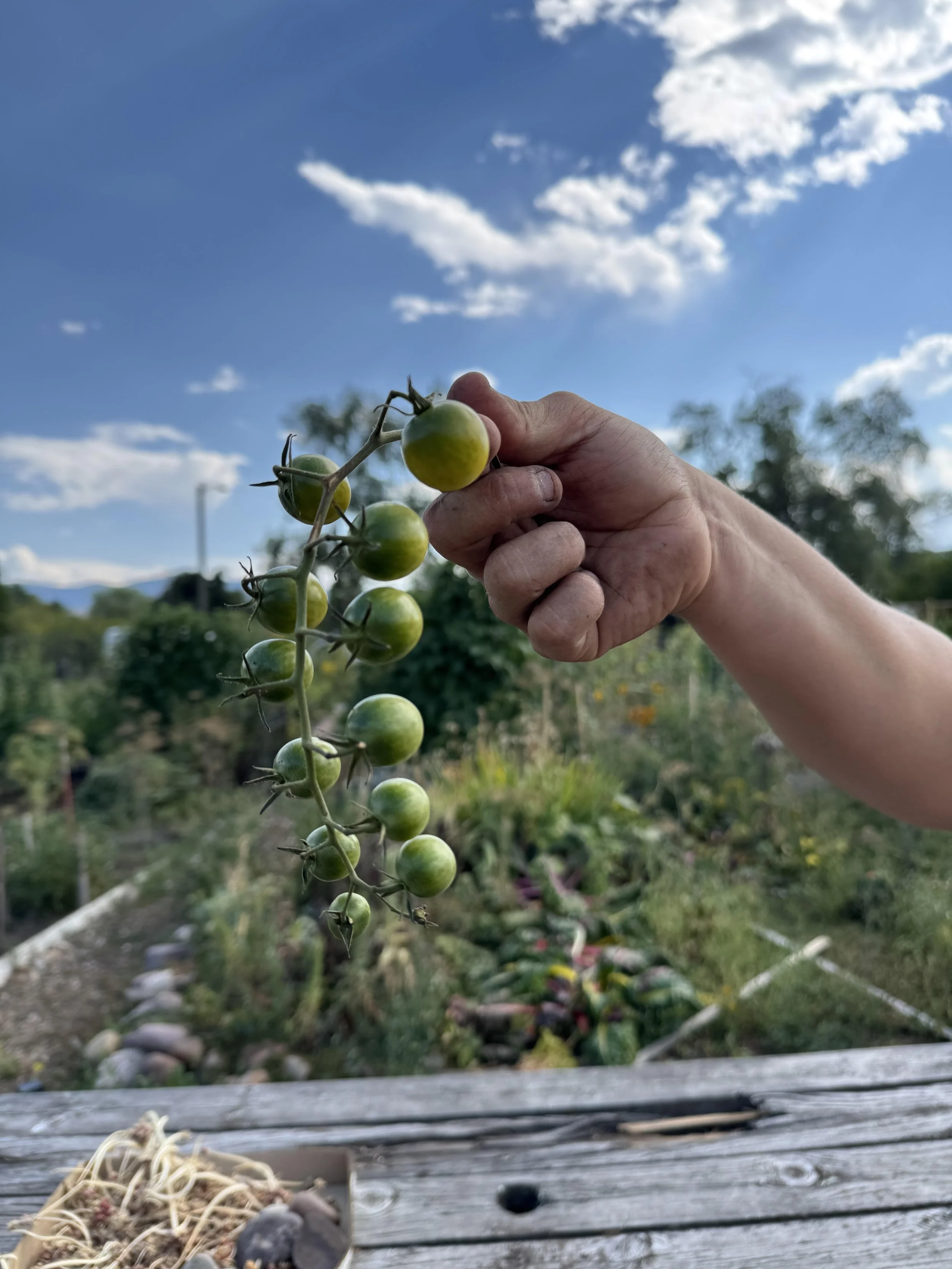
A vine of semi-ripe tomatoes showing a faint blush of red, that can be brought inside to counter-ripen.
Final reflections
But gardening in a changing climate isn't just about frost blankets and transplant timing — it's also about how it feels to keep showing up, season after season.
I asked gardeners how it feels to be tending the land in times like these, wondering if feelings of grief and frustration might be growing with our changing climate. Overwhelmingly, they reflected on feelings of hope, gratitude, and pride alongside climate grief and anxiety. As a Bitterroot Line gardener put it, “I feel empowered by being able to grow my own food and I feel immense gratitude for having a space to do so. I am worried that with the drastic changes in weather, the amount of things we're able to grow in our state will decrease.”
To Valerie Pateman, “gardening gives me a sense of hope and safety. It helps me feel that I can teach my grandchildren to understand how to use the soil to grow things.” Finally, as Elaine Fraticelli at Ivy Street Garden sees it, “gardening has been a way to sort out my feelings with the land itself. I know the trees are dying, the animals are migrating, and I know that things are going to get difficult for me and my loved ones/community, so if I can learn to steward a small ecosystem now, it eases my fears about the future.”
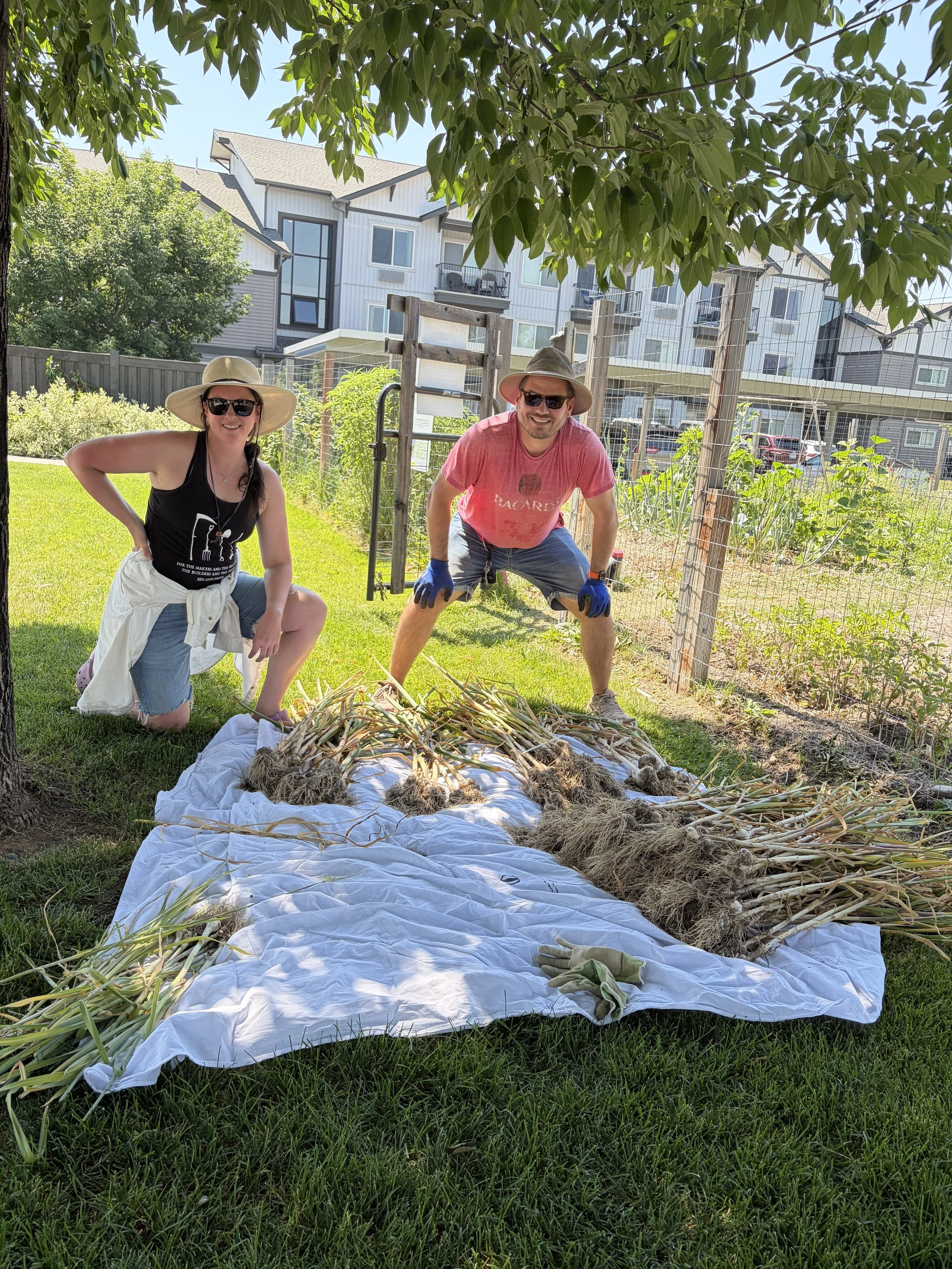
Milwaukee Trail gardener Peter Zalewski poses with a bounty of garlic harvest next to the garden