
Growing Community: On Our Partnership with Soft Landing Missoula
In the Northside Community Garden, an unassuming plant tells a long story. You could be fooled into mistaking it for a weed, with its fuzzy top and spear-shaped leaves. But its cultivation has a deep connection to place, and its presence in Missoula is a sign of cultural resilience, community collaboration, and adaptation to new and different climates. Lenga lenga is a crop grown predominantly by gardeners connected with the organization Soft Landing Missoula, which works to provide resources and support for immigrant and refugee families in town, coming from places as diverse as Syria, Afghanistan, the Democratic Republic of Congo, Eritrea, and Yemen, among others.
Many of the gardeners with Soft Landing Missoula come from farming backgrounds, and bring with them a wealth of agricultural knowledge and experience that they are translating to a new landscape and climate. Lenga lenga is one such plant that has arrived with its people. A member of the amaranth family, it is easily mistaken for common local weeds like pigweed and goosefoot; however, it is also a nutritious leafy green that is highly popular across Eastern and Central Africa, and is cooked into stews or as a side for other dishes. There are no lenga lenga seeds commercially available in the United States, so Soft Landing gardeners rely on saved seed from their gardens each year to preserve this cultural crop.
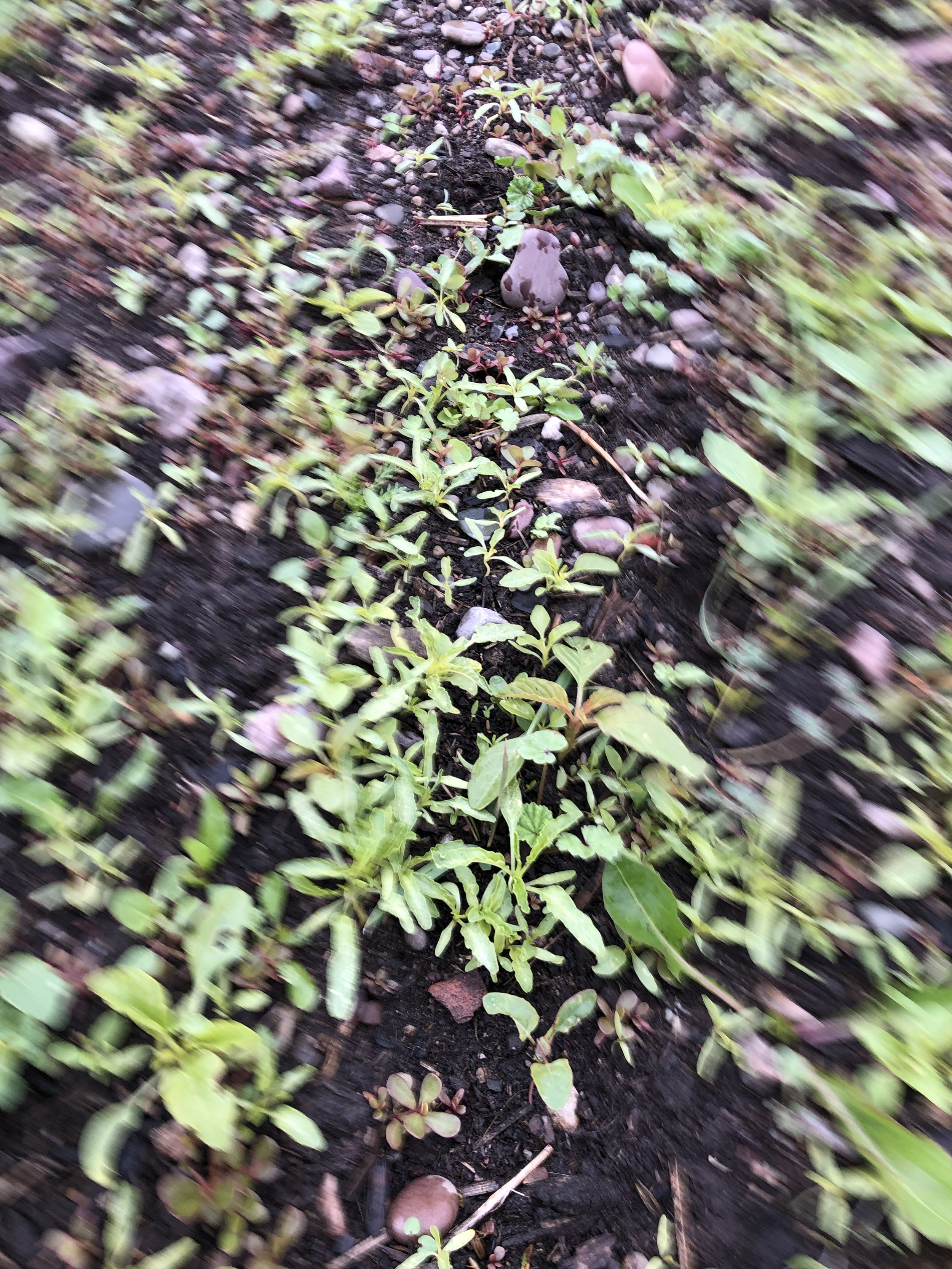
A photo of lenga lenga in a community garden plot with a blurry frame.
Alongside growing plants that are reminiscent of home, the practice of gardening can also help people who are new to Missoula ground themselves in a new landscape and community. I spoke with Greta Bates, the Director of Community Partnerships and Family Services at Soft Landing Missoula, about the partnership that’s growing between our two organizations. She reminded me of how important land access can be in helping a new place feel like home.
“I think digging in the dirt and being connected to the land is something that's familiar and like home,” she said. “Everybody lives in apartments in Missoula. Nobody has yards. Nobody really has access to land. And so being able to do something that's familiar on their own terms, in their own way, is just comforting.”
The Northside Community Garden, one of Missoula’s oldest and largest garden sites, is currently home to seven Soft Landing community gardeners. Situated between the railroad tracks and the highway, the Northside neighborhood has a rich history. The neighborhood developed with the construction of the railroad in the late 1800’s and early 1900s by a largely immigrant workforce - home to Germans, Irish, French, Chinese, African Americans initially. The railroad expanded between 1900 and 1916, hiring many Greek, Italian, and Japanese immigrants who made the northside their home. Within the garden are the living roots of generations of immigrants who have come to Missoula throughout its history to put down roots and reap a harvest, in spite of the sometimes cold and hostile climate.
For immigrant and BIPOC residents of Missoula, a town that is 86% white, establishing a sense of belonging, comfort, and community can go a long way. Often, language and cultural barriers make connection difficult, and Missoula carries with it a legacy of racism and marginalization that impacts the town to this day. Here at Garden City Harvest, our partnership with Soft Landing Missoula has been a way to deepen the relational ecologies we strive to build through our work. Alongside connecting Soft Landing gardeners to plots across Missoula, Garden City Harvest’s River Road Neighborhood Farm donates hundreds of pounds of produce a week to Soft Landing families as part of our commitment to local food justice and sovereignty.
Greta also emphasized that gardening is more than a pastime, or a pathway to connection – for many, it’s a source of food security that they depend on. “Now more than ever, people are struggling with food insecurity, and with the administration taking away public benefits that some of our clients were eligible for, now they're not. Food is really important, and fresh food is really important, and it's really expensive. These aren't just little hobbies. People are using that food to feed their families.”
Greta's words point to the difference between food security and food sovereignty. Food security asks whether people have enough to eat. Food sovereignty asks a bigger question: who decides what that food is, how it's grown, and where it comes from? For families rebuilding their lives far from home, food sovereignty can grow from a plot of earth, a pocket of seed saved from home, and a season of greens these folks grew up eating.
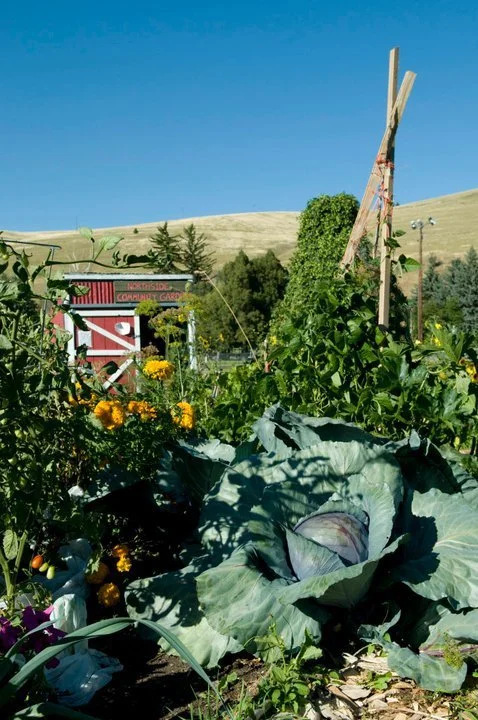
The Northside Community Garden, the one of the oldest and largest community gardens in Missoula, pictured here in 2009 with the north hills in the background.